

Privacy and security matter more than ever today, which is why many property owners seek reliable ways to protect both homes and businesses. An automatic gate provides a strong first barrier by combining a durable physical structure with modern technology, so your property stays protected while access remains controlled. More than a convenience feature, it creates a clear boundary that helps you decide who enters and exits, reducing the risk of unwanted intrusion.
Because every property has different needs, working with experienced gate automation professionals makes it possible to develop automatic gates that match your security expectations and complement the look of your space. Installing automatic gates is not a minor upgrade but a meaningful investment in safety and property value, especially when long-term protection and peace of mind are the priority.
The Security Role of Automatic Gates for Homes and Businesses
Homeowners and local businesses often choose automatic gates because they add a clear, practical layer of security. By creating a controlled entrance instead of an open path, an automated gate forms a physical barrier that limits access to authorized visitors only, making it far more difficult for intruders to enter unnoticed. When a property looks protected and monitored, it becomes a less attractive target for burglary or trespassing, especially compared to locations that allow easy walk-in access.
What makes this added security even more valuable is that it does not come at the expense of convenience. With a remote or similar access device, the gate opens at the push of a button, so you can enter without leaving your vehicle, which matters most when it is late, raining, or you simply want to avoid exposure outside. Feeling in control of who comes and goes becomes part of your routine, because the system works quietly in the background while keeping your property protected.
For a deeper look at why this matters, read “How Automatic Gates Add Security, Convenience, and Property Value.”
How Automatic Gate Systems Control Access at Residential and Commercial Properties
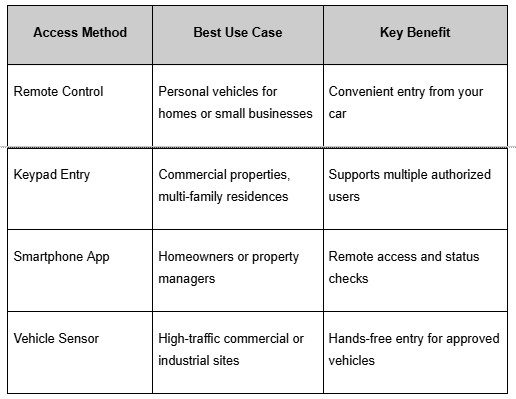
Automatic gate systems manage entry by responding to approved access methods chosen for the property. At the center of the setup is the automatic gate motor, which opens and closes the gate upon receiving a secure command, whether from a remote, keypad, or phone-based control. Because the same core system can support different access tools, gate automation fits a wide range of residential and commercial settings while still maintaining predictable control.
For many residences, a vehicle remote offers a simple and familiar way to enter without delay, while commercial sites and multi-resident properties often rely on keypad access that allows multiple authorized users to enter a code rather than carry individual remotes. These systems can be paired with both new and existing fencing to create a perimeter that looks unified and works as intended, so security and appearance stay aligned.
How Automatic Gate Operators Deter Unauthorized Entry
Automatic gate systems discourage break-ins by sending a strong message before anyone even reaches the door. A closed, automated entrance signals that the property is protected and access is controlled, which makes it much less appealing to someone looking for an easy opportunity. That deterrent works continuously without effort from you, because the gate stands as a visible reminder that entry is restricted and monitored.
Beyond first impressions, the structure and operator mechanism of automatic gate systems provide genuine resistance against forced entry. Automatic gates are designed to remain secure under pressure, making it difficult and noisy to push them open by hand, delaying intruders and increasing their risk. Many modern automatic gate systems also feature automatic closing after a set period, minimizing the chance of the gate being left open accidentally. Additionally, obstacle detection ensures safe operation around vehicles and pedestrians, maintaining strong protection without creating new hazards.
Automatic Gate Openers and Automatic Gate for Driveway Options
Selecting an automatic gate opener for a driveway is a key part of making an automated entrance reliable, because the opener is the motor-driven system that handles the gate’s movement every time it cycles. Different properties call for different configurations, which is why openers are designed around the two most common driveway layouts: swing and sliding gates. Swing gates operate like doors that move inward or outward, while sliding gates travel horizontally along a track, which makes each style better suited to certain spaces and terrain.
A good match comes from understanding how the gate’s size and weight interact with the opener, along with how the property is arranged and powered, since heavier or wider gates require operators built for higher loads. The access features tied to the opener also shape the overall experience, whether the system relies on remotes, keypads, or integrated smart controls, so function and convenience stay aligned with daily use. When the opener is chosen to fit the gate style and site conditions, the automatic gate for driveway access becomes consistent and secure as a result.
For more on effortless entry, see “Automatic Gates for Convenience: Keyless and Remote Access Benefits.”
Swing, Sliding, and Barrier Automatic Gate Openers for Different Sites
The best automatic gate opener depends on how your entrance is laid out and how you want the gate to behave, because each operator type is engineered around a specific motion. Swing gate openers work well when there is enough clear space for the panels to arc inward or outward, and they support both single-leaf and dual-leaf gates that meet at the center, which often suits properties that prefer a traditional driveway presence. Sliding gate openers make more sense when space near the entrance is tight, or the driveway rises sharply, since the gate moves sideways along the fence line and avoids the clearance that a swing path would require.
Barrier arm operators fill a different role from swing or sliding systems, because they are designed mainly for controlling vehicle flow rather than sealing a perimeter. They are common in high-traffic environments where fast, repeatable access matters more than a fully enclosed gate line, so their value is in regulating entry volume and timing. By matching the operator style to the physical site and the entrance’s purpose, the system performs its intended function without forcing the property to adapt to the hardware.
- Swing Gate Openers: Ideal for properties with enough clearance for the gate to arc inward or outward, especially when the driveway entrance is wide, and the look is meant to feel traditional or estate-style.
- Sliding Gate Openers: Designed for entrances where side space is available but swing clearance is limited, making them a strong fit for tight driveways, uneven ground, or sloped approaches.
- Barrier Arm Openers: Built for managing vehicle flow in high-traffic areas such as shared entry points, where controlling access timing matters more than creating a fully enclosed perimeter.
Pairing Automatic Gates with Property Layout and Gate Installation Needs
An automatic gate should fit the property as naturally as it protects it, because the entrance is both a security boundary and part of what people notice first. Materials and designs vary widely, from clean modern lines to more classic profiles, allowing the gate to reinforce curb appeal while still performing as a secure perimeter element. When the gate style complements the home or business exterior, the system feels intentional rather than added on, which matters for properties where appearance and function need to work together.
Gate installation is just as important as the gate choice itself, since alignment, grade, and clearance determine how smoothly the operator moves the panels and how well the access control equipment functions day to day. Site conditions such as driveway slope, available run space, and proximity to power all shape how the system is configured, and these factors influence daily performance long after the gate is in place. When the layout and installation requirements are accounted for from the start, the automatic gate system operates safely and consistently because it is built around the realities of the property.
Automatic Gate Repair and Built-In Safety Features That Protect Properties
Even a well-built automatic gate may require maintenance over time, especially when it operates daily and is exposed to the elements. When performance slips or a mechanical issue appears, security can weaken and safety risks can rise, which is why timely automatic gate repair matters for keeping the entrance dependable. Addressing problems early helps restore smooth operation and prevents the system from becoming a weak point, especially when the gate is your first line of defense.
Modern automatic gates are also equipped with safety features that ensure secure use, because protecting a property should never come at the expense of putting people or vehicles at risk. Obstacle detection is one of the most critical built-in tools, stopping or reversing the gate if something is in its path, so movement stays controlled and predictable. Understanding how repairs and safety functions work together makes it easier to maintain a gate that protects your space consistently, while still operating safely day after day.
For design-focused benefits, check out “Automatic Gates That Add Value Through Curb Appeal and Design.”
Why Automatic Gate Repair Supports Reliable Security Over Time
Automatic gates rely on moving components that cycle repeatedly under changing weather conditions, which means gradual wear is part of normal operation even when card reader systems and other access devices are used daily. As parts loosen or strain, performance can become uneven, and security can suffer, since a gate that hesitates, jams, or fails to close fully cannot protect a perimeter the way it should. Prompt automatic gate repair keeps the system reliable by restoring proper function before small issues turn into failures that leave an entrance exposed.
Because early wear is often noticeable before a complete breakdown happens, recognizing the usual warning signs can help you understand when repair is needed. Common indicators include the following:
- The gate moves more slowly than usual, pauses unexpectedly, or fails to complete a full open or close cycle.
- You hear grinding, squeaking, or other unusual sounds coming from the motor or moving parts.
- The gate responds inconsistently when triggered by a remote control, keypad, or other access method.
Safety and Smart Monitoring Features in Modern Automatic Gate Systems
Modern automatic gate systems prioritize safety and security through obstacle detection sensors that stop or reverse the gate when something is in its path, helping protect people, pets, and vehicles. Many automatic gate openers now include smart controls that let you monitor and operate the gate from your phone, so you can check its status, receive alerts, and manage access even when you are away. With features like automatic closing, solar compatibility, and backup battery support, these systems stay reliable during outages while keeping daily operation efficient, because a secure entrance should remain safe and functional at all times.
Automatic gates strengthen security for homes and businesses by creating a controlled entrance that makes it easier to track who enters and exits, while built-in monitoring and safety features help discourage unauthorized access. When an automatic gate system is selected to match the needs and layout of a property, it supports a more reliable perimeter, improves curb appeal, and adds long-term value, because protection works best when it fits the space it is meant to secure.
For property owners in Southern Alameda County who want that kind of dependable security and smooth daily access, R&S Erection of Southern Alameda County offers automatic gate solutions built around real site needs and long-term performance. Whether you are securing a home driveway or a commercial perimeter, our team focuses on creating gate systems that look great, operate reliably, and reinforce your first line of defense. Contact us today or give us a call to discuss your automatic gate project and take the next step toward a safer, more secure property.
Frequently Asked Questions
Can automatic gates be integrated into an existing fence or automatic gate for the driveway without rebuilding the perimeter?
Yes, automatic gates can usually be added to an existing fence or driveway when the current gate is structurally sound and properly aligned, because most automatic gate systems are designed to integrate with gates that already meet basic stability and clearance needs. A professional assessment confirms whether the gate and surrounding perimeter can support an automatic gate opener without major changes, which allows security to be upgraded without rebuilding the entire entrance.
How often should automatic gate systems be professionally serviced to maintain security performance?
Automatic gate systems should be professionally serviced on a regular schedule to keep security consistent, since moving parts and control components gradually shift under daily use and weather exposure. Routine service keeps automatic gates dependable by identifying wear early and restoring proper operation before performance drops.
What are the common signs that automatic gate repair is needed to keep the system secure?
Automatic gate repair is usually needed when the gate slows down, hesitates, makes unusual noises, or fails to open and close smoothly, because these changes often indicate strain in the motor, track, or operator system. Inconsistent response to remotes or keypads and visible misalignment are also warning signs that security may be weakening.
What are automatic gates, and how do automatic gate systems differ from manual entry gates?
Automatic gates open and close through powered operators rather than manual force, which means access is handled through remotes, keypads, sensors, or smart devices instead of being done by hand, as explained by Wikipedia. Automatic gate systems add convenience and security by keeping entry controlled and consistent, especially when you want a reliable barrier that protects your property without requiring constant physical effort.
How do automatic gates work, and what are the most common automatic gate systems used today?
Automatic gates work by receiving an approved signal that activates an operator motor to move the gate, whether it swings on hinges or slides along a track. Swing and sliding automatic gate systems are the most common today because they suit the majority of driveway and perimeter layouts, while still allowing secure, controlled access.
What security advantages do automatic gates provide for residential and commercial properties?
Automatic gates create a controlled boundary that limits entry to authorized users, which reduces the chance of trespassing and opportunistic intrusion. By turning an open driveway into a monitored access point, automatic gates strengthen perimeter security for homes and businesses alike.
Which safety features matter most in modern automatic gate operators and control setups?
Obstacle detection is the most important safety feature in modern automatic gate operators, since it stops or reverses movement when something is in the gate’s path. Systems may also include controlled closing and secure access validation, which keeps operations safe without weakening security.
What are the potential limitations or disadvantages of automatic gates in certain properties?
Automatic gates may be limited by space, terrain, or power access, because some properties cannot easily support a swing path or a long sliding run. If the wrong gate type is paired with the site, performance and appearance can suffer, which makes proper system matching essential.
Do automatic gate openers support solar power or other alternative energy sources?
Yes, many automatic gate openers can operate with solar or battery-supported power, which keeps the gate running reliably even where conventional electricity is limited, as outlined by the U.S. Department of Energy. Alternative energy support helps automatic gate systems stay consistent and secure, especially when uninterrupted access matters most.
Why are automatic gate operators and automatic gate systems becoming more common in property security and gate installation planning?
Automatic gate operators are becoming standard in security planning because they combine visible deterrence with controlled access and everyday convenience. As automatic gate systems continue to improve in reliability and integration options, they fit naturally into modern gate installation designs for both homes and businesses.